Safety and Damage Assessment
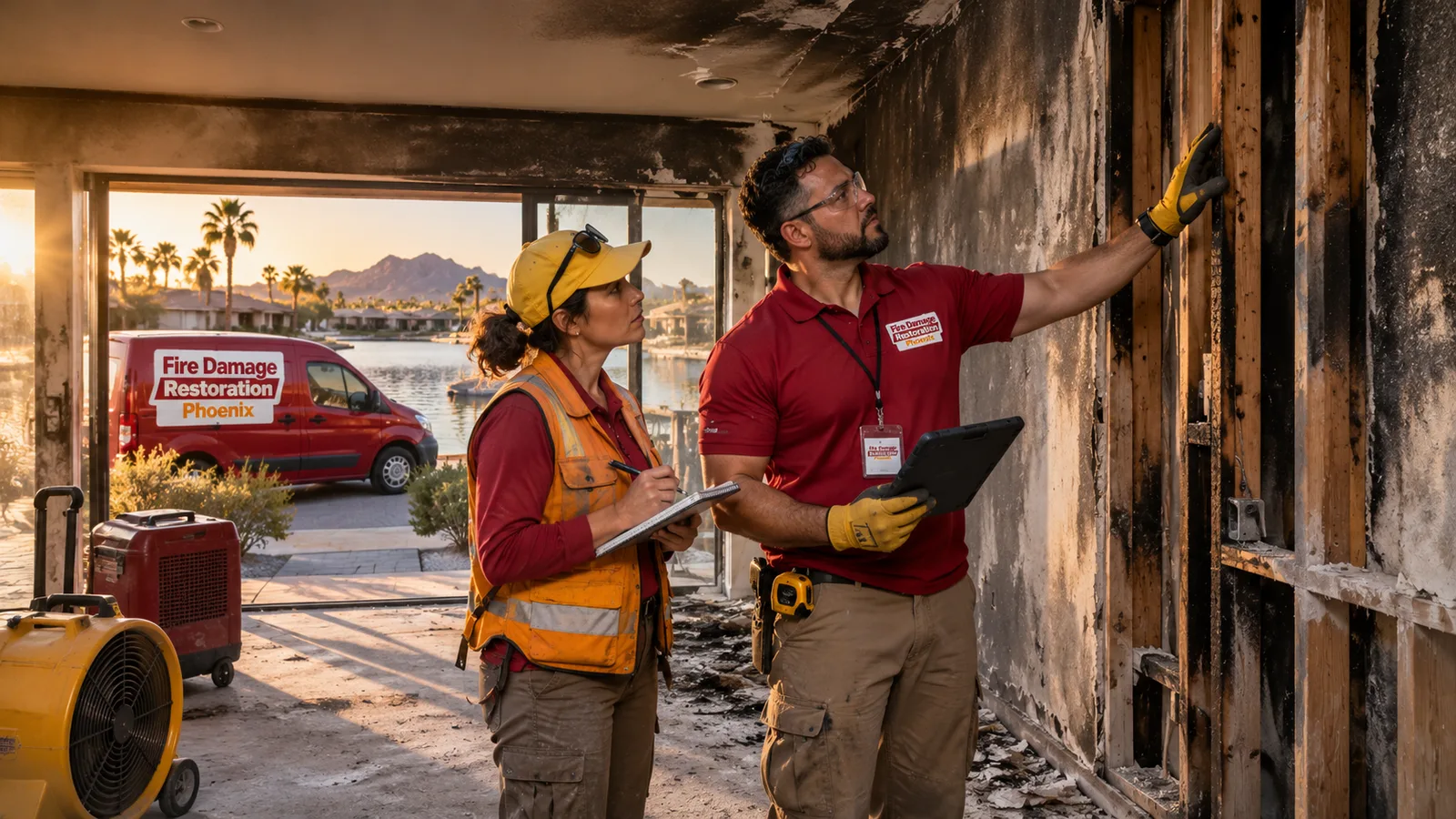
The contractor checks for unstable materials, damaged building components, exposed electrical hazards, and areas that should remain restricted before cleanup begins.
Serving Phoenix, Arizona & surrounding areas
Calls answered around the clock
One call connects you directly with a local fire damage contractor who serves Phoenix and the surrounding area.
Fire damage Phoenix restoration can involve much more than replacing visibly burned materials. Heat, smoke, soot, and water used during firefighting can affect finishes, framing, wiring, insulation, HVAC components, and personal belongings. Smoke may also move into rooms that were never touched by flames.
The first task is to identify unsafe areas and determine how far the damage extends. A contractor may document affected rooms, inspect exposed structural members, distinguish cleanable materials from materials that require removal, and look for moisture left by suppression efforts. In Phoenix, high outdoor temperatures can add stress when a damaged roof, wall, or cooling system leaves a building exposed.
We connect callers with home companies across Phoenix, AZ that handle fire-related property recovery. You speak with the contractor directly, discuss the condition of the property, receive the quote from that contractor, and decide whether to proceed.
The contractor checks for unstable materials, damaged building components, exposed electrical hazards, and areas that should remain restricted before cleanup begins.
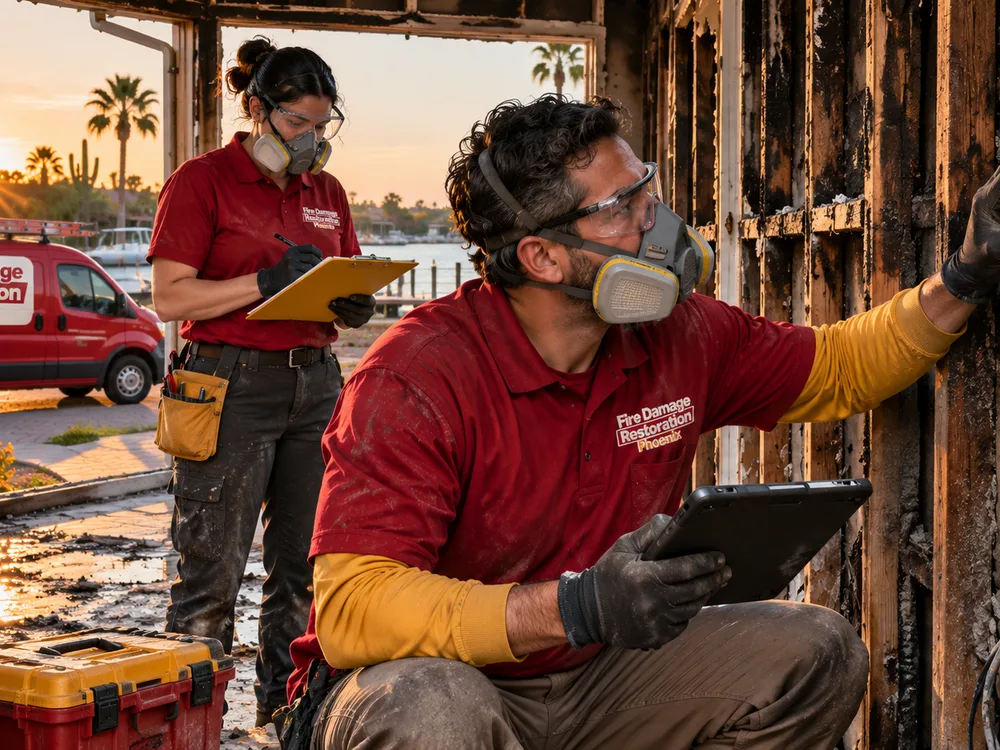
Soot may be dry, oily, or protein-based. The residue type and affected surface determine whether vacuuming, dry cleaning, wet cleaning, sealing, or removal is appropriate.
Odor treatment starts with removing contaminated debris and cleaning residue. Contractors may then use air filtration, thermal fogging, hydroxyl treatment, or ozone where conditions permit.
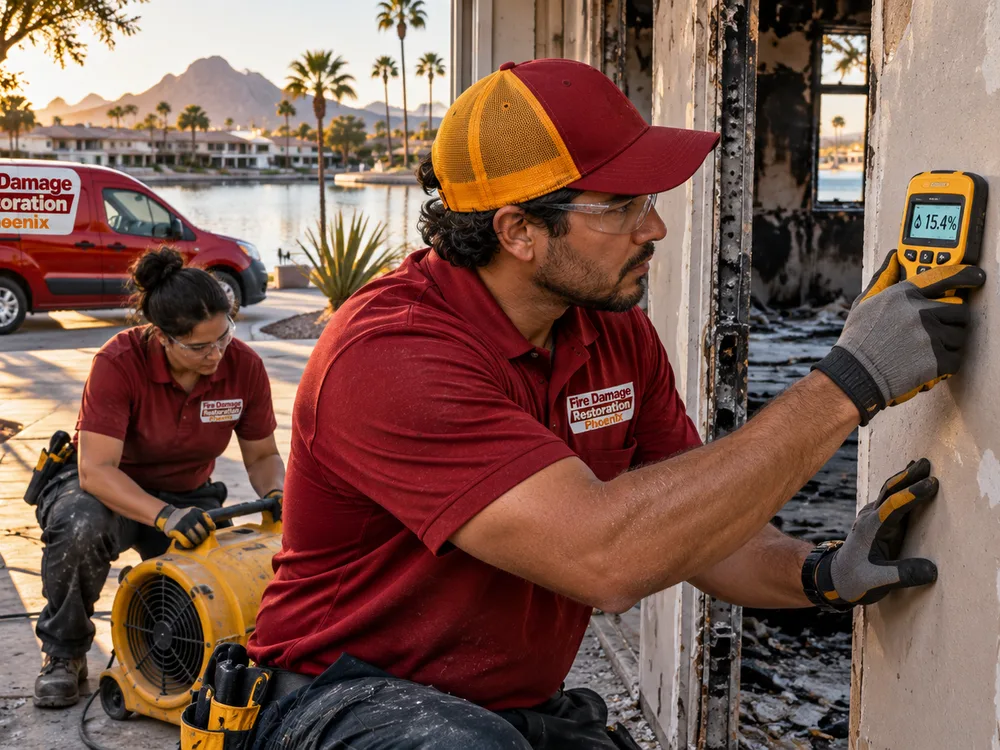
Firefighting water can soak drywall, insulation, flooring, and cavities. Moisture readings help define drying needs and reduce the chance of concealed material deterioration.
Materials that cannot be restored are removed. Reconstruction may include insulation, drywall, trim, flooring, roofing components, cabinets, and other damaged assemblies.
Furniture, textiles, electronics, and personal property may need inventory, cleaning, deodorization, off-site treatment, or disposal based on material and exposure.
Call, enter your ZIP code, and you are connected directly with a local contractor who serves that area. There is no form or intake conversation with a middleman.
The contractor evaluates visible fire damage, smoke migration, soot deposits, moisture, structural concerns, utilities, contents, and access conditions. Fire department restrictions or unsafe conditions may limit entry.
Openings may need temporary protection, unsafe materials may need isolation, and the condition of affected rooms is documented before removal or cleaning. Any required permits are handled through the appropriate local authority, such as the City of Phoenix Planning and Development Department for work within city limits.
The contractor establishes containment as needed, removes debris, extracts remaining water, dries damp assemblies, and cleans surfaces with methods suited to the residue and material.
Persistent odor sources are treated after damaged material and soot are addressed. Reconstruction begins once the affected assemblies are ready, with inspections scheduled when required.
One call replaces the search through multiple fire restoration contractors. Talk directly with a local contractor about the property and decide what happens next.
Discuss the property’s fire, smoke, soot, moisture, and odor conditions directly with a contractor serving the Phoenix area.
Replace a lengthy contractor search with one direct connection.
Connect with a contractor serving Phoenix and the surrounding area.
Review the contractor’s assessment and quote, then decide whether to proceed.
One call replaces the search through multiple fire restoration contractors. Talk directly with a local contractor about the property and decide what happens next.
CALL NOW: +1 928 331 4170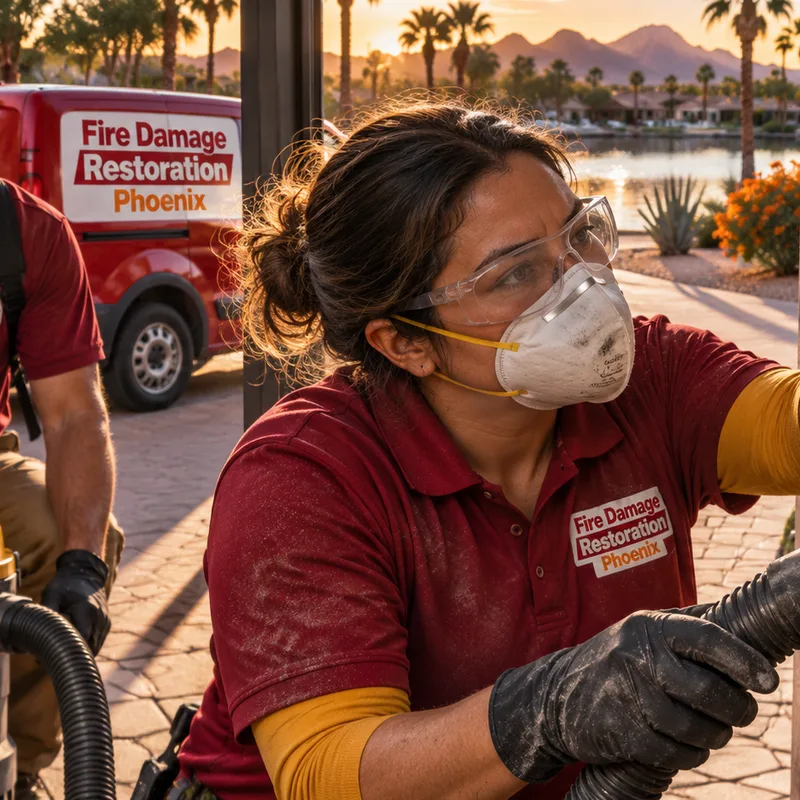

That decision depends on heat exposure, residue type, depth of contamination, structural condition, and the material's porosity. Glass and some sealed surfaces may respond to cleaning, while deeply charred framing, contaminated insulation, and damaged gypsum board may require removal. Ask the contractor to explain the basis for each recommendation.
Odor remains when smoke residue is still present in porous materials, wall cavities, insulation, HVAC components, or contents. Deodorizer alone does not remove the source. A contractor should address contaminated material and residue before selecting an odor-treatment method.
Occupancy depends on structural safety, utility status, air conditions, containment, and the location of the work. A contractor can explain which areas must remain restricted. In Phoenix, loss of air conditioning during hot weather can also affect whether staying in the building is practical.
Ask which rooms and contents are included, how containment will be arranged, what will be cleaned or removed, how moisture and odor will be checked, and which reconstruction tasks are included. The contractor should provide the quote and scope directly, and you decide whether to proceed.
Some reconstruction work may require permits and inspections, particularly when structural, electrical, mechanical, plumbing, or roofing systems are altered. Requirements depend on the property's jurisdiction and the exact work. Ask the contractor which approvals apply and who will coordinate them.
The contractor should determine whether smoke entered the return or supply system and whether filters, ducts, coils, air handlers, or insulation were affected. Cleaning, component replacement, or isolation may be recommended based on residue and heat exposure. The system should not be used if doing so could spread contamination.
Call and get connected with a local contractor who handles fire, smoke, soot, odor, and property restoration work in the Phoenix area. You talk with the contractor directly and decide what happens next.