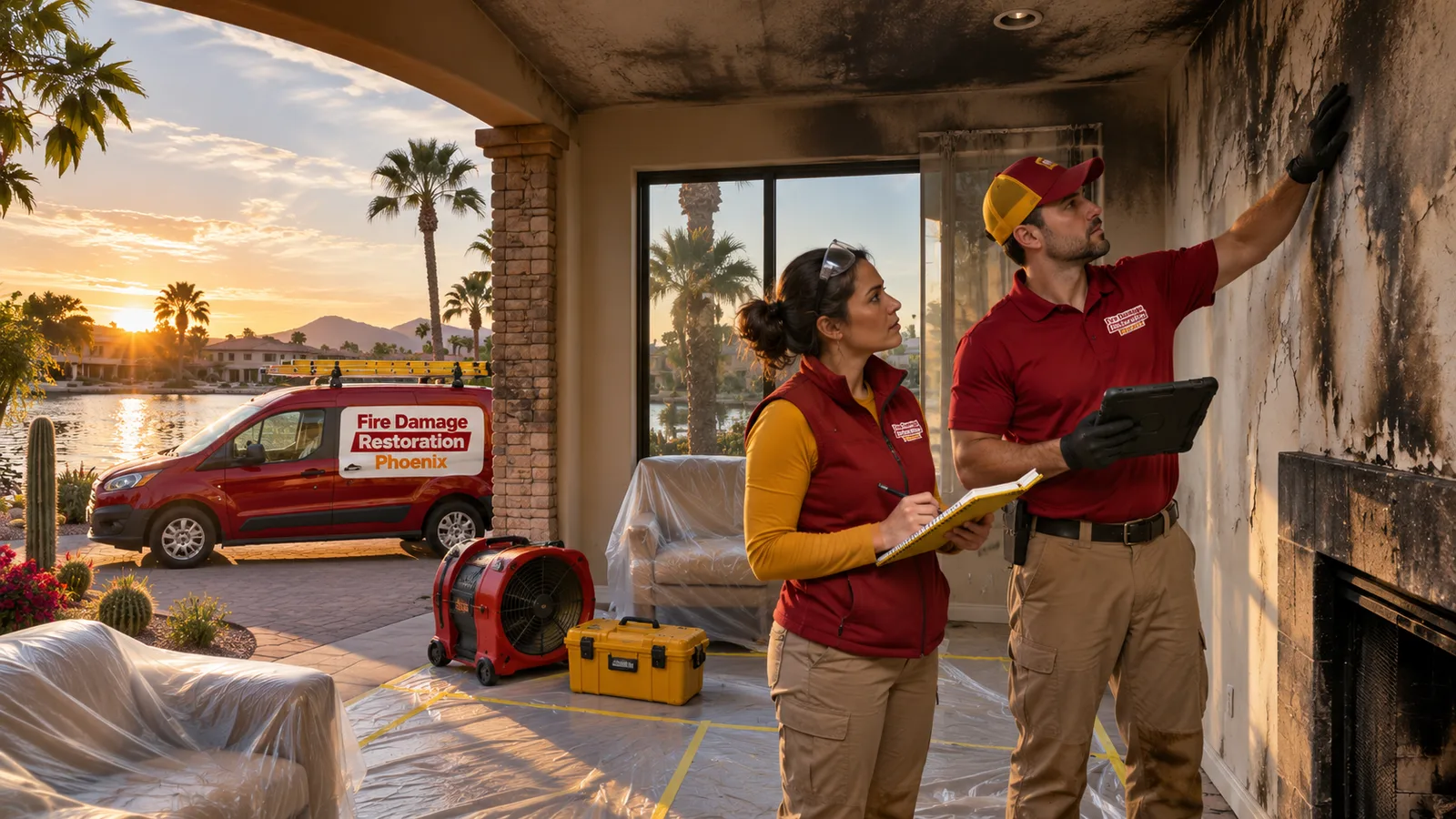
Contractor assessing smoke and soot damage inside a Phoenix home with visible wall staining and protected flooring
Fire restoration · Phoenix, Arizona

Fire Restoration Phoenix AZ

One call connects you directly with a local contractor who handles smoke, soot, odor, and fire-damaged materials.

✓One call instead of many
✓Direct contractor conversation
✓Phoenix-area service
✓You decide what happens next
Assessment and cleanup scope

What Phoenix Fire Restoration Involves

Fire restoration Phoenix AZ work begins with a careful assessment of the affected rooms, structural materials, contents, and building systems. Visible charring may be limited to one area, while smoke residue can move through doorways, ceiling cavities, return-air paths, and adjoining rooms. A contractor determines what can be cleaned, what needs specialized treatment, and what must be removed.

The assessment commonly distinguishes between dry soot, oily smoke residue, protein residue, and heavy char. Each behaves differently. Dry particles can be driven deeper into porous material by improper wiping, while oily residue may smear across painted walls or finished wood. Protein residue from cooking fires can leave a persistent odor even when staining is difficult to see. Contractors may use HEPA-filtered vacuuming, dry cleaning sponges, controlled washing, media cleaning, odor treatment, and selective demolition as conditions require.

Phoenix heat can intensify odors in enclosed homes, garages, and attic spaces. Air-conditioning systems can also distribute fine residue if they operated during or after the fire. A contractor may inspect supply registers, return grilles, filters, accessible duct components, insulation, and areas around penetrations before defining the work.

Fire Damage Restoration Phoenix makes the search simpler. We connect callers with home contractors serving Phoenix who handle fire-related cleanup and damaged-material restoration. You speak with the contractor directly, discuss the property conditions, receive any quote from that contractor, and decide whether to proceed.
Affected materials and work areas

What a Fire Restoration Contractor Checks

✓

Safety and Structural Conditions

The contractor looks for unstable finishes, weakened framing, damaged glazing, exposed wiring, standing water, and areas that should remain restricted. Fire department access openings and damaged doors or windows may also require temporary protection.

✓

Smoke and Soot Spread

Residue is checked beyond the visibly burned room. Ceilings, walls, cabinets, closets, attic access points, fixtures, and HVAC registers can reveal how smoke traveled through the property.

✓

Salvage Versus Removal

Nonporous and finished materials may respond to cleaning, while deeply charred drywall, insulation, carpet pad, or composite materials may need removal. The decision depends on heat exposure, residue penetration, odor, and physical damage.

✓

Water Used During Suppression

Water from firefighting can soak flooring assemblies, wall cavities, cabinets, and insulation. Moisture readings help define drying needs and identify materials that cannot remain enclosed.

✓

Odor Sources

Odor treatment starts with removing char and cleaning contaminated surfaces. Air treatment alone does not correct residue trapped in porous materials, concealed cavities, or damaged contents.

✓

Documentation and Work Scope

The contractor can explain which areas are included, what is being cleaned or removed, how contents will be handled, and which repairs fall outside the initial cleanup scope. Ask for those details in writing before authorizing work.

CALL NOW: +1 928 331 4170
From connection to repair planning

How Fire Restoration Work Typically Proceeds

01

Call and Connect Directly

Call, enter your ZIP code, and you are connected with a local contractor who serves that area. There is no form or intake conversation with a middleman.

02

Property Assessment

The contractor assesses the fire area and follows smoke, soot, water, and odor into connected spaces. The scope may include the living area, garage, attic, HVAC components, and exterior openings, depending on the incident.

03

Protection and Stabilization

Unsafe areas are isolated as needed. Openings may be covered, unaffected surfaces protected, and loose debris removed so detailed cleaning or selective demolition can proceed.

04

Water Removal and Drying

If suppression water is present, wet materials are identified and drying is coordinated with removal decisions. Closing damp cavities too early can create additional damage.

05

Soot Cleaning and Odor Treatment

The contractor selects cleaning methods for the residue and substrate. HEPA vacuuming may precede surface cleaning, and odor treatment follows source removal rather than replacing it.

06

Damaged-Material Removal and Repair Planning

Materials that cannot be restored are removed according to the agreed scope. After cleanup, the contractor can clarify what reconstruction is needed and whether another trade must address electrical, HVAC, roofing, or structural work.

CALL NOW: +1 928 331 4170
Why one call helps

Reach a Phoenix Fire Restoration Contractor Directly

One call replaces a long contractor search and lets you discuss the affected rooms, materials, smoke spread, suppression water, and possible next steps with the contractor who may handle the work.

Direct contractor conversation

Discuss conditions and the proposed scope directly with a contractor who serves the Phoenix area.

One call instead of many

Avoid contacting contractor after contractor while the property still needs assessment.

Local service area

The connection is made with a contractor serving Phoenix and the surrounding area.

You decide what happens next

The contractor explains the assessment and any proposed work. You review the information and decide whether to proceed.

CALL NOW: +1 928 331 4170

Avoid calling contractor after contractor. One call connects you directly with a local fire restoration contractor who serves Phoenix and the surrounding area.

CALL NOW: +1 928 331 4170
Work and material detail

Fire, Smoke, and Soot Restoration Work

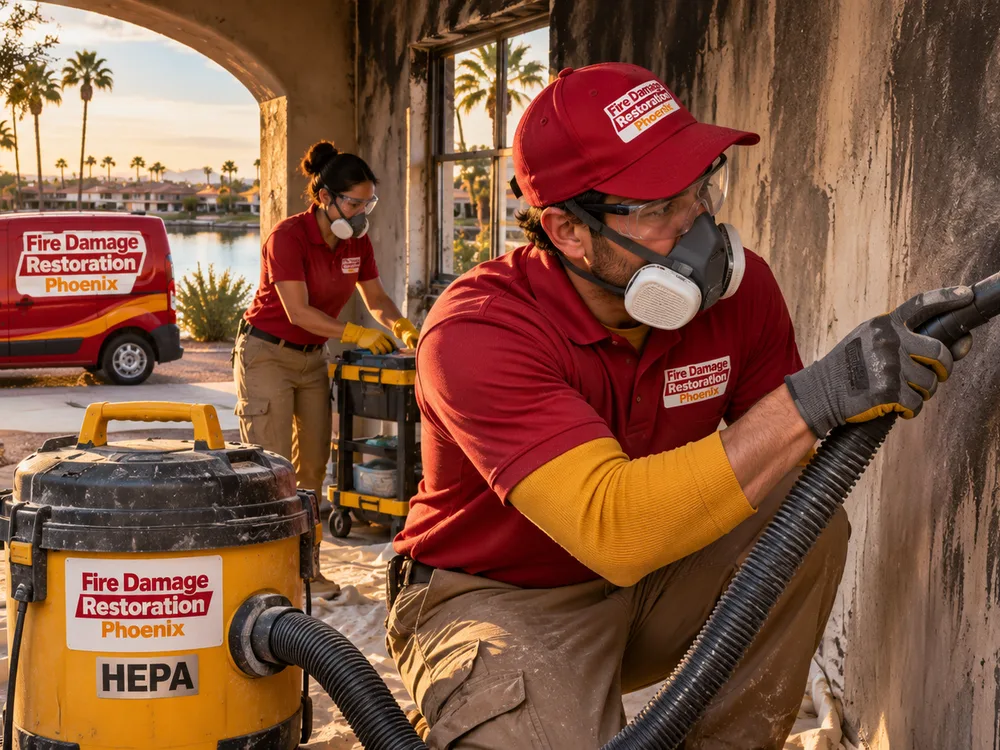
Contractor using a HEPA-filtered vacuum to collect dry soot from an interior wall before surface cleaning
Dry residue is collected before wet cleaning when the material and soot type call for that sequence.
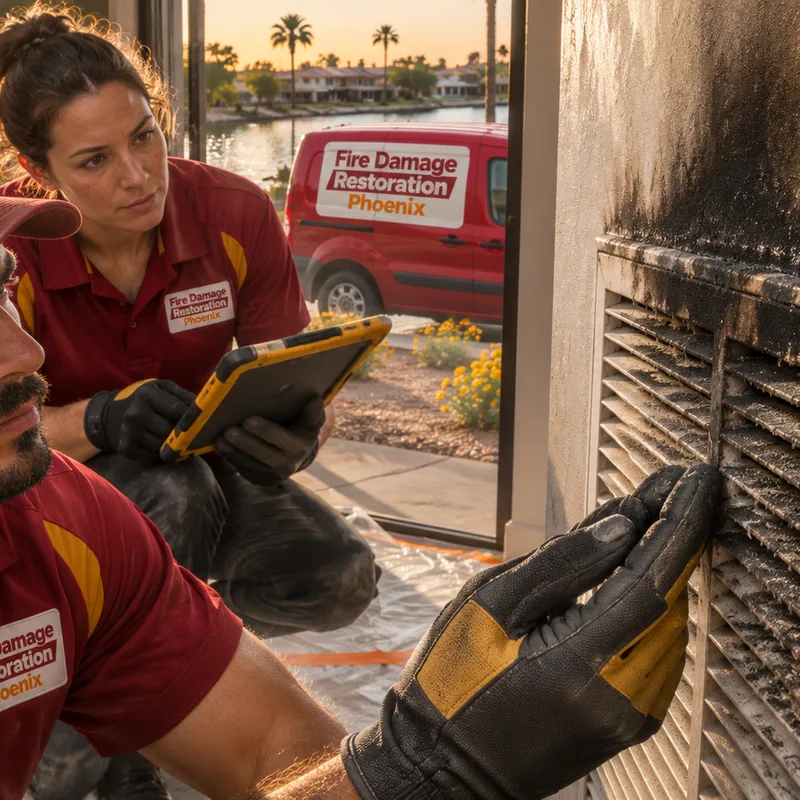
Close-up of soot staining around an HVAC return grille in a fire-affected home
Registers and return-air paths can help show how smoke moved beyond the fire area.
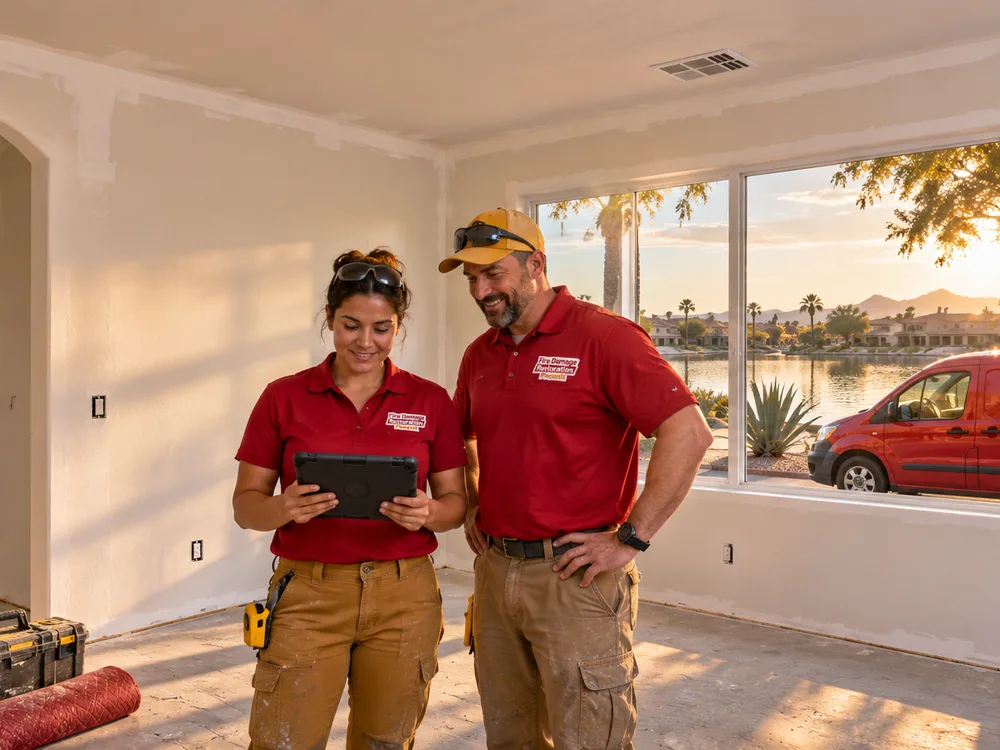
Clean unoccupied residential room after smoke residue removal and preparation for finish repairs
Cleaned surfaces are evaluated before sealing, repainting, or reconstruction begins.
Common questions

Questions About Fire Restoration in Phoenix

Can smoke damage extend beyond the room where the fire started?+

Yes. Heated smoke and fine particles can enter adjoining rooms, closets, ceiling spaces, and HVAC pathways. A Phoenix fire restoration contractor may inspect surfaces that appear untouched because residue and odor are not always visible under ordinary lighting.

Does every smoke-damaged material need to be removed?+

No. The decision depends on the material, residue type, heat damage, odor penetration, and whether cleaning can produce an acceptable surface. Finished wood, tile, metal, and some painted surfaces may be cleanable, while charred or deeply contaminated porous materials often require removal.

Why should soot not be wiped with a household cleaner?+

An unsuitable cleaner can smear soot, set stains, or damage the finish underneath. Contractors identify the residue and test a small area before selecting dry cleaning, detergent washing, solvent-based methods, or another treatment.

What happens to belongings during fire restoration?+

The contractor determines whether contents can remain protected in place or should be inventoried and moved for cleaning or storage. Ask who will handle fragile items, electronics, textiles, documents, and items with heavy odor before work begins.

Will odor treatment alone remove smoke odor?+

Odor treatment is most effective after charred debris and contaminated residue have been removed or cleaned. Persistent odor may come from insulation, unfinished wood, carpet pad, cabinets, wall cavities, or HVAC components, so the source must be addressed first.

What should I ask the contractor before authorizing the work?+

Ask which rooms and materials are included, what will be cleaned, what will be removed, how suppression water is handled, and whether reconstruction is part of the scope. The contractor should also explain exclusions, payment terms, documentation, and any warranty terms offered for the work.

Can I stay in the property during Phoenix fire restoration work?+

The contractor must assess that question based on structural conditions, air contamination, utilities, work zones, and access restrictions. Local authorities or the fire department may also restrict entry after an incident, and those restrictions should be followed.

One direct conversation

Speak Directly With a Local Fire Restoration Contractor

One call connects you with a contractor who handles fire, smoke, soot, and odor damage in the Phoenix area. You talk with the contractor directly and decide what happens next.

CALL NOW: +1 928 331 4170