Damage assessment
The contractor identifies burned, heat-damaged, wet, smoke-affected, and apparently unaffected areas. Structural framing, electrical components, plumbing, roofing, windows, and finishes may require separate evaluation.
Serving Phoenix, Arizona & surrounding areas
Calls answered around the clock
One call connects you directly with a local fire damage restoration contractor who serves the Phoenix area.
Phoenix fire damage resources should help you understand what may need attention, how restoration contractors assess the property, and which questions to ask before work begins. Fire damage can involve burned materials, smoke residue, corrosive soot, firefighting water, and odors that have moved beyond the room where the fire started.
We connect callers with local home companies serving Phoenix, AZ that handle fire damage restoration. There is no form or intake conversation. You speak with the contractor directly, discuss the conditions at the property, receive the quote from that contractor, and decide whether to proceed.
Safety comes first. Do not enter a fire-damaged structure until the fire department or other responsible authority has said entry is permitted. Avoid touching soot-covered surfaces because skin oils can press residue deeper into paint, fabric, and finished wood. Do not energize wet electrical equipment, disturb a damaged gas line, or eat food exposed to heat, smoke, soot, or firefighting chemicals.
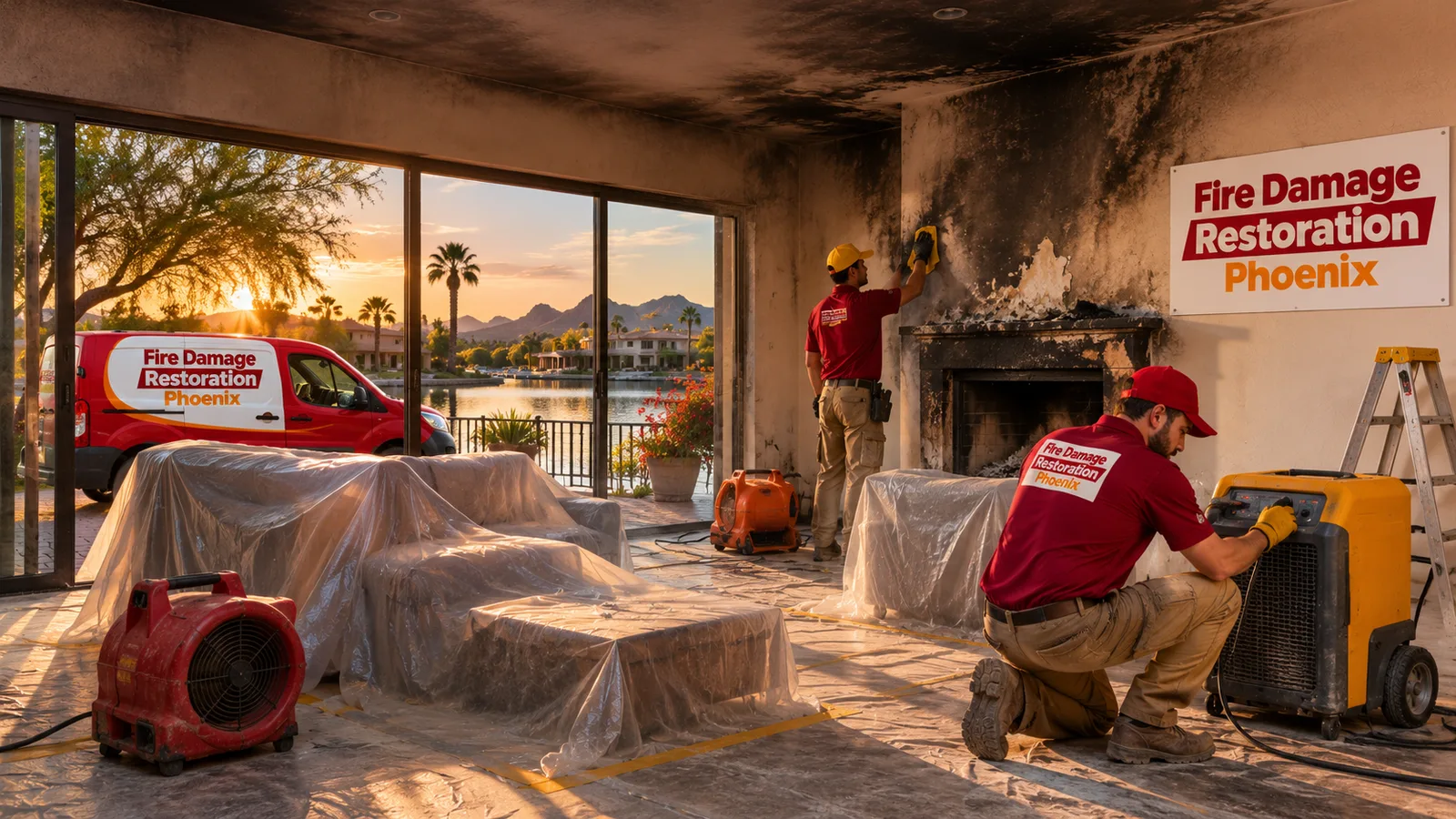
Once entry is permitted, a contractor may document affected rooms and trace smoke movement through doorways, return-air paths, attics, wall cavities, and HVAC components. Phoenix homes vary widely. Older central-city houses may have plaster, original woodwork, or remodeled assemblies with hidden layers. Block construction common across the Valley can retain smoke deposits on porous masonry and in joints. Tile roofs and attic spaces also require careful inspection when heat or firefighting water reached the roofline.
Hot, dry conditions can change the surface appearance of wet materials without proving that concealed cavities are dry. Moisture meters, thermal imaging used as a screening tool, and direct inspection can help identify water retained behind drywall, beneath flooring, or around insulation.
The contractor identifies burned, heat-damaged, wet, smoke-affected, and apparently unaffected areas. Structural framing, electrical components, plumbing, roofing, windows, and finishes may require separate evaluation.
Dry soot, oily smoke residue, and protein residue behave differently. Contractors may use HEPA vacuuming, dry cleaning sponges, compatible detergents, or controlled abrasive methods based on the surface and residue.
Fire suppression can leave water in flooring, wall cavities, insulation, and cabinets. Extraction, controlled air movement, dehumidification, and moisture readings may be needed before damaged assemblies are closed.
Odor control starts with removing damaged material and cleaning residue. Air filtration, hydroxyl treatment, thermal deodorization, or sealing may be considered after the contamination source has been addressed.
Furniture, textiles, electronics, documents, and personal belongings are evaluated by material, exposure, and cleanability. Items selected for treatment should be inventoried and handled separately from debris.
After cleanup and drying, the property may need new drywall, insulation, flooring, cabinets, roofing, paint, or other finishes. The scope should distinguish restoration work from reconstruction.
Wait for authorization before entering. If the structure has unstable framing, damaged utilities, contaminated water, or a compromised roof, additional controls may be needed before assessment begins.
Photographs and room-by-room notes establish what was burned, wet, stained, or removed. If an insurance claim is involved, ask the insurer what documentation it requires and whether damaged material must be retained for review.
The contractor may discuss temporary weather protection, water extraction, corrosion control, air filtration, or isolation of affected rooms. Utility shutoffs and structural work should be handled by the appropriate trade.
Items and building materials are classified for cleaning, specialized treatment, disposal, or further evaluation. Porosity, heat exposure, residue type, and structural condition guide that decision.
Restoration work may include HEPA vacuuming, surface cleaning, controlled drying, and odor treatment. Moisture readings and visual checks help determine whether affected areas are ready for repair.
Reconstruction begins after the removal, cleaning, and drying scope is settled. The contractor should explain which materials will be replaced, what remains, and how changes to the scope will be approved.
Skip the search through multiple listings. One call connects you with a local contractor who handles fire, smoke, soot, and firefighting-water damage in the Phoenix area.
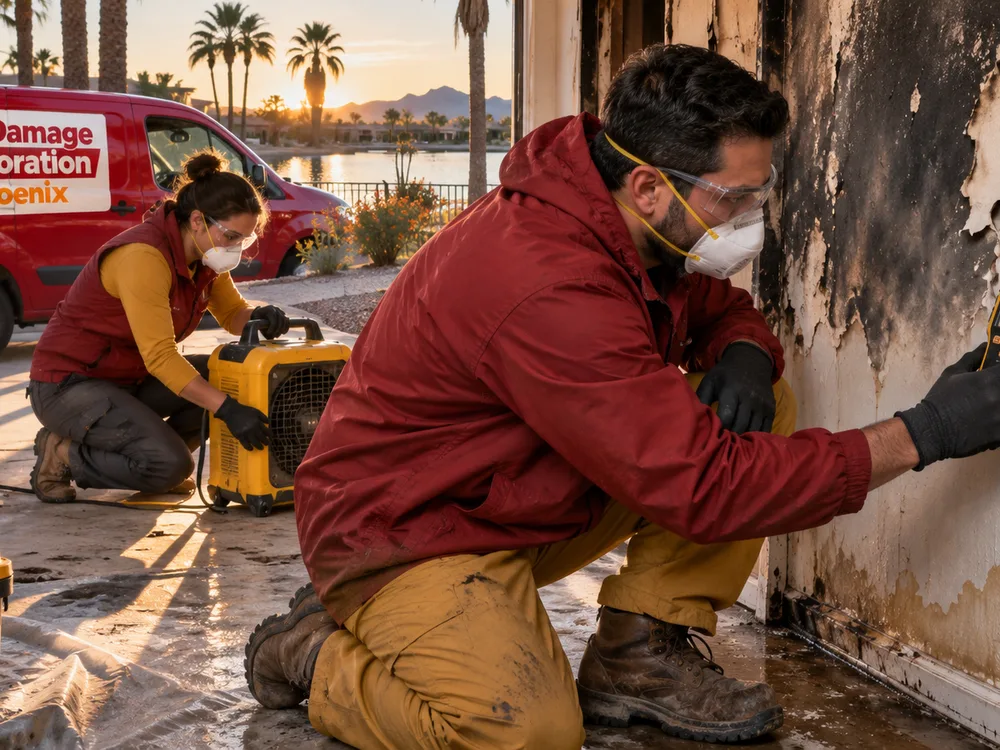
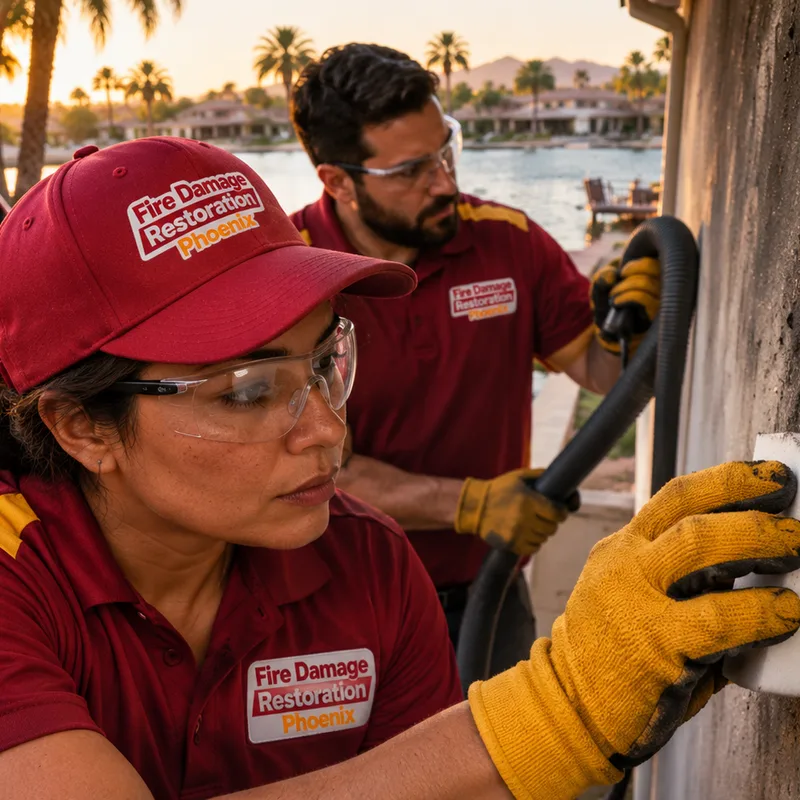
Leave unstable materials, wet electrical equipment, damaged gas components, and heavily soiled contents undisturbed. Do not run an HVAC system that may circulate soot. If an insurance claim is involved, preserve photographs and ask the insurer before discarding damaged property unless removal is required for safety.
The decision depends on heat damage, structural condition, porosity, residue type, water exposure, and whether contamination can be reached. Sealed tile may be cleanable, while charred framing, smoke-filled insulation, swollen composite cabinets, or deeply contaminated porous finishes may require removal or specialized evaluation.
Heated smoke moves through openings, pressure differences, wall cavities, attic spaces, and HVAC pathways. Fine particles can settle on cool surfaces well beyond the source room, so assessment may include adjoining rooms, closets, returns, supply registers, and concealed spaces.
Odor treatment does not replace source removal and cleaning. Burned debris, settled residue, and contaminated porous material should be addressed first. The contractor can then explain whether filtration, deodorization, or an encapsulating coating is appropriate for remaining odor.
Ask for a written scope that identifies cleaning, removal, drying, contents handling, odor treatment, and reconstruction. Confirm who coordinates specialty trades, how moisture and cleaning results are checked, how personal belongings are documented, and how scope changes are presented for approval. Ask about applicable warranty terms directly.
Call the number and enter your ZIP code. You are connected directly with a local fire damage restoration contractor who serves that ZIP, and you decide with the contractor what happens next.
One call connects you with a contractor who serves the Phoenix area and handles property recovery after fire, smoke, soot, and firefighting-water damage. Discuss the property with the contractor, get the quote from them, and decide whether to move forward.